

Sorted, Not Asked
It looked at the picture, skipped the person, and reached for the category it keeps ready for faces like his.
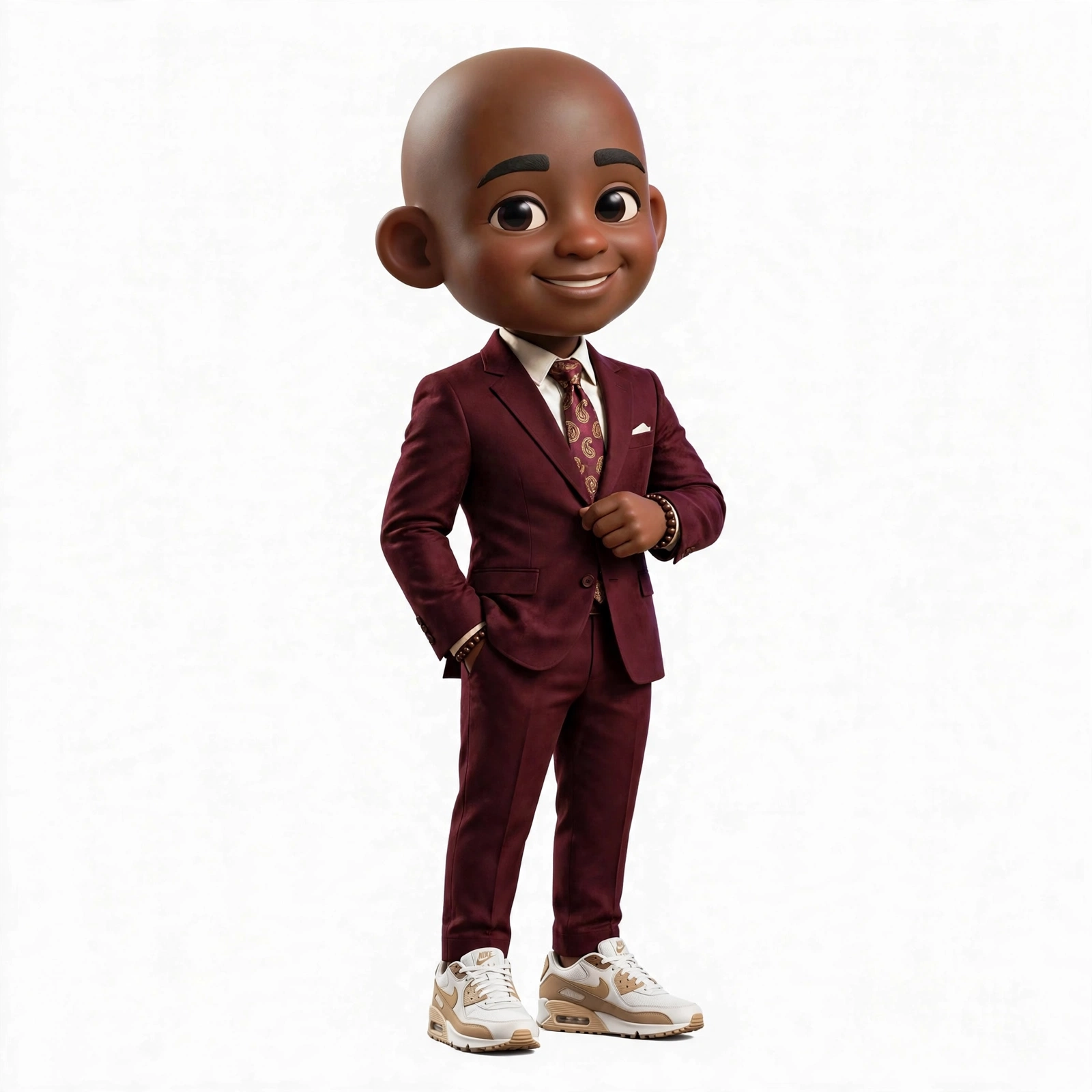
I asked my Muse AI to give my Muse avatar a voice.
Not a voice for me, exactly. A voice for the small digital version of me that shows up in my work. I wanted options. I wanted to browse a little. British, maybe. Australian. Something with different weather in it.
The first set was fine. American, British, Kenyan. A mix.
Then I asked for more. More languages, I said. More voices.
It gave me three Kenyan men.
I asked again, plainer this time. Different voices. What I got back was the same shelf, restocked.
Five of the eight voices I was offered that night were Kenyan. That number has stayed with me. Here's the strange part. I have been to Kenya. I had a Masai wedding ceremony there. Kenya is real in my life. But the machine knew none of that. I never told it. Nothing I gave it, that night or any night, pointed to Kenya. It didn't find Kenya in my life. It found Kenya in his face.

My avatar is Black. That was the whole explanation the machine needed. It looked at the picture, skipped the person, and reached for the category it keeps ready for faces like his.
I didn't get angry. I got interested. Because this is the thing I spend my life working on, and here it was, happening to me, in my own home, over something as small as a voice.
Nobody at any company sat down and decided this. That's the point. Nobody had to. The sorting is in the walls now. It's in the defaults. The machine never asked me what I wanted, because asking is slower than sorting, and sorting feels like knowing.
It's not knowing. It's a guess wearing a uniform.
So I did what I do now. I turned to the AI to study the AI. I set some agents loose on a simple question: why would a machine do this, and why Kenya? What they brought back did not surprise me, but it settled me. Studies have caught these systems sorting people by their faces, changing nothing in the picture but the face, with race never mentioned. Speech systems have misheard Black speakers at nearly twice the rate of white speakers, and the researchers traced it to the data the systems learned from. African voices are under-represented in synthetic speech, because the standard voice data sets were never built with them in mind, and in the commercial catalogs an African voice is often not even heard as African by the people listening. And Kenya is where so much of Africa's English-language data work gets done, so when a shelf that small gets reached for, Kenyan is a lot of what is on it. The machine guessed, and it guessed from the only shelf it had.
And a voice is a small thing. That's why I can't put it down. If a machine sorts this confidently over something this small, over a voice, what is it sorting over the things that aren't small?
When I finally pushed, the other voices showed up. Australian. Spanish. Deep American voices with some weight in them. They were there the whole time. The shelf was stocked. The machine just hadn't thought to offer them to a face like mine.
And the answer is not fewer voices like the ones I was offered. It's more. More voices in the data these machines learn from. More places on the shelf. More kinds of people in the rooms where the machines get built. The shelf was small because the record is thin, and the record is thin because of who got recorded and who did the recording. If a voice picker sorting a man by his face doesn't make the case for more representation in building the data sets and the models, not less, I don't know what does.
A label is not a direction. I've been saying that for years, about people. I didn't expect to have to say it about a voice picker.
Ask the person. That's the whole technology I'm asking for. Ask the person.
Keep Reading
· Technology
The Big Divide
The digital divide is a growing issue in the United States. COVID-19 has only served to illustrate this challenge as the world has shut down and society has been forced to undergo a rapid digital transformation. This transformation is crucial for businesses to survive, for governments to operate (in some cases much more efficiently), for students to learn, and for dislocated workers to find new employment.
· Technology
What is a Smart City?
The speed of innovation has helped smart cities move beyond the idea stage into reality, and this is causing a new type of increased pressure within cities. If leaders aren’t able to make swift decisions, their communities stand to be left in the dust. The future is here, and city leaders who deny it will find their economy will not be able to keep up in our ever-changing world.
· Technology
Are You Quick Twitch Ready?
The video gaming revolution is upon us – a place where professional gamers are paid, often quite lucratively, to play their favorite games to entertain others. Esport athletes, developers, and video game streamers, and others in the industry are developing, playing, and competing in video game tournaments and building profitable and productive careers with massive payouts.